Technology
Digital-twin validation for Exotrail proximity operations
Working with European space-mobility company Exotrail, Vimotek applied Orbittwin to a rendezvous and inspection scenario, providing a digital environment for early CONOPS validation and mission visualisation.
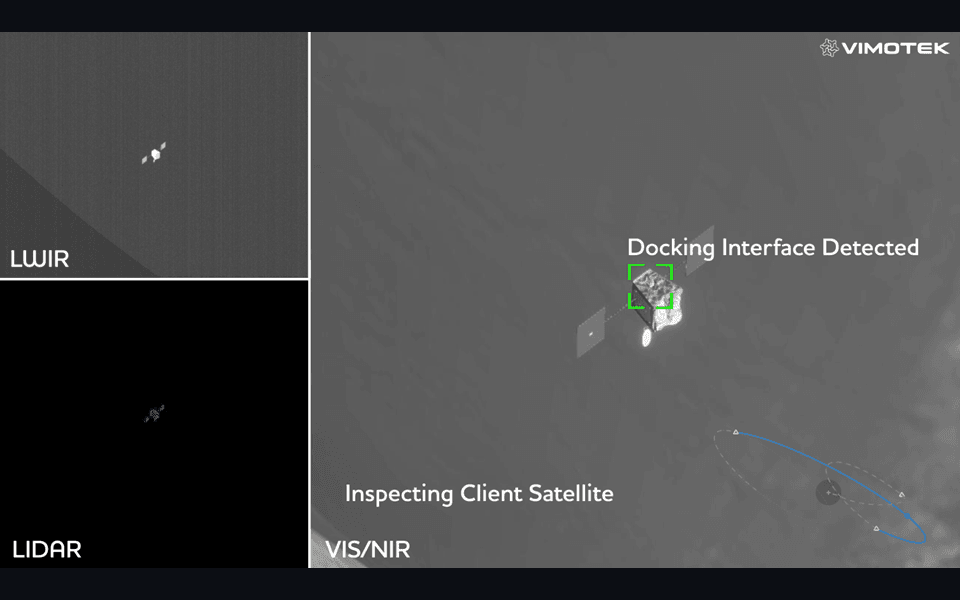
Vimotek has used Orbittwin to support mission validation for rendezvous and proximity operations with European space-mobility company Exotrail.
The work involved building a mission-specific digital twin of a rendezvous and inspection scenario involving Exotrail’s spacevan™ RPO concept. The environment allowed the intended encounter to be represented, examined and communicated before becoming an operational mission.
The assignment demonstrates how mission-specific digital twins can help spacecraft teams evaluate complex proximity operations earlier — when mission logic, CONOPS and operational assumptions can still be explored and refined.
Validating the mission before proximity becomes real
Rendezvous and inspection missions require more than defining where two spacecraft are supposed to meet.
Mission teams need confidence in how the encounter develops, how the operation is structured and how different elements of the mission interact before spacecraft are committed to carrying it out in orbit.
For the Exotrail work, Orbittwin was used to represent the rendezvous and inspection scenario and support early validation of the mission CONOPS.
The same environment also provided visual material for communicating the intended operation to end users and other stakeholders.
This combination allows a mission-specific digital twin to support both engineering and operational understanding: the encounter becomes something that can be examined before it has to be executed.
Making complex operations easier to understand
Proximity operations can be difficult to communicate through trajectories, requirements and engineering data alone.
A digital representation makes it possible to see how an operation is intended to unfold: how spacecraft approach one another, how their relative geometry changes and how activities such as inspection fit into the wider mission concept.
For Exotrail, the Orbittwin environment therefore supported both the validation and visualisation of a future rendezvous and inspection operation.
Exotrail’s Jean-Luc Maria highlighted the importance of simulation capability for the developing in-orbit services market:
“As a satellite operator working on behalf of European space infrastructure, mastery of simulation tools is a key element in the future of in-orbit services. We believe that Franco-Swedish cooperation is extremely promising, given the industrial quality of our partners such as Vimotek.”
The collaboration illustrates how simulation and digital-twin capability can contribute to the preparation of new in-orbit services as mission concepts progress towards operational use.
Applying Orbittwin to a real mission context
The Exotrail work demonstrates how Orbittwin — Vimotek’s platform for mission-specific digital twins of spacecraft encounters — can be applied to a real mission context.
Orbittwin is built around the idea that complex spacecraft interactions should be modelled, validated and rehearsed in the context of the actual mission rather than treated as generic simulation exercises.
For planned proximity operations, that means giving mission teams an environment in which spacecraft, mission logic and encounter scenarios can be represented together.
The Exotrail assignment applies that approach to a concrete rendezvous and inspection scenario: using a mission-specific digital twin to support the preparation, validation and communication of the intended operation.
Building confidence before flight
As in-orbit servicing, logistics, inspection and other proximity-driven missions become more common, the ability to prepare those encounters becomes increasingly important.
The physical encounter may only happen once the spacecraft are in orbit. The mission team can nevertheless examine and challenge the operation long before then.
Mission-specific digital twins provide a way to do that — turning an intended spacecraft encounter into something that can be modelled, validated and communicated before flight.
For Vimotek, that is the role of Orbittwin: helping operators build confidence in spacecraft encounters before proximity becomes operational reality.
Related stories
Programmes
Validating spacecraft-encounter technology for defence applications
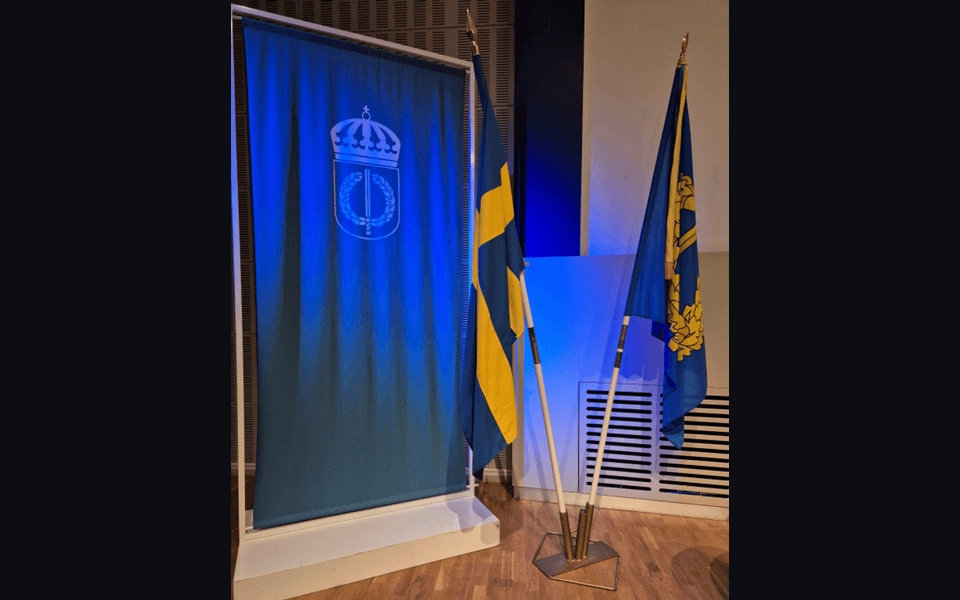
Vimotek has participated in Sweden’s Civil-Military Innovation Programme to validate how spacecraft-encounter technology can support defence-related space operations and strengthen Swedish capability.
Company
Jens Lundström appointed CEO of Vimotek
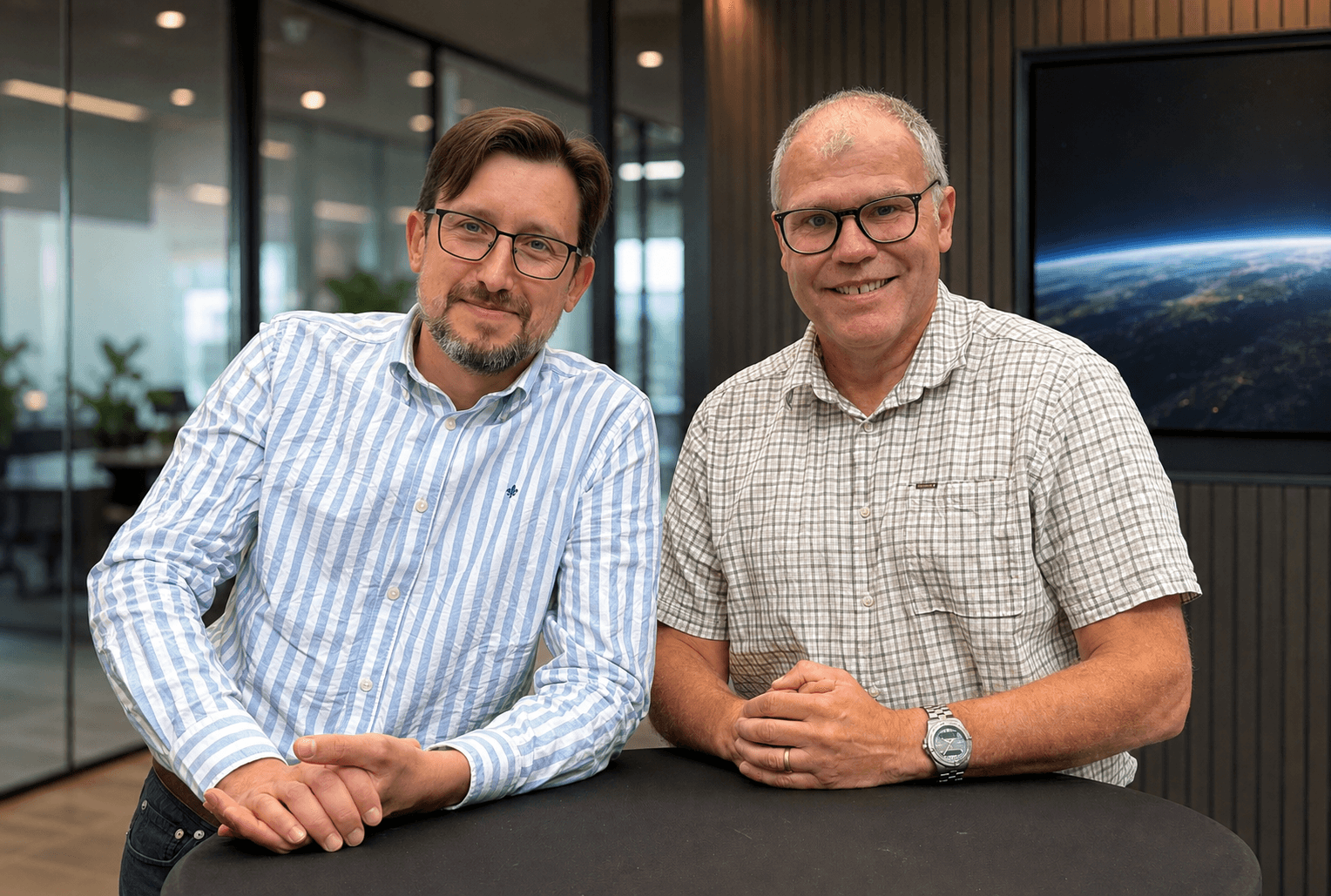
Vimotek has appointed Jens Lundström as Chief Executive Officer, strengthening the company’s leadership as it prepares for in-orbit demonstrations, commercial missions and continued growth across European civil and defence space.
Programmes
Mission-specific digital twins for Europe’s EPRIME in-orbit infrastructure
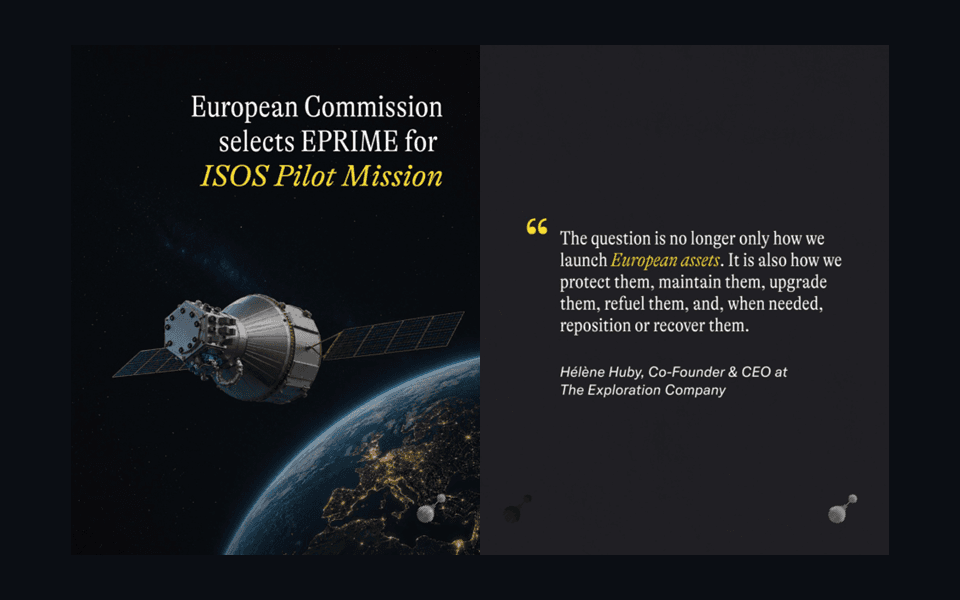
Vimotek is contributing to EPRIME, a Horizon Europe project developing a modular European platform for in-orbit logistics, servicing, refuelling and robotic experimentation.