Technology
Integrating Navcam for spacecraft proximity operations
Supported by the Swedish National Space Agency, the project develops the integration and validation needed to bring multiple sensing and processing functions together within Vimotek’s Navcam system.
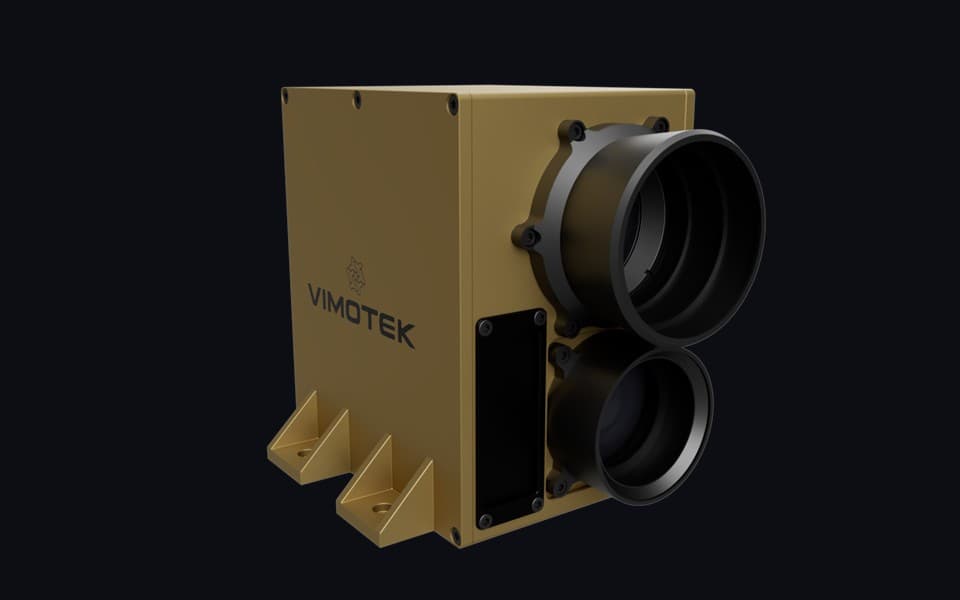
Vimotek is starting a new development project focused on the integration of Navcam, its onboard perception system for rendezvous and proximity operations.
The project brings together sensing, onboard processing, data fusion and spacecraft interfaces into a more integrated system for missions where spacecraft need to approach, inspect or interact with other objects in orbit.
The work is supported by the Swedish National Space Agency through the Rymdtillämpningsprogrammet.
Integrating the Navcam system
Reliable proximity operations depend on more than an individual sensor.
A spacecraft needs to combine observations from multiple sensing modalities, process that information onboard and provide useful relative-navigation information to the wider spacecraft system.
The project focuses on integrating these functions within Navcam, bringing sensing, processing and spacecraft interfaces together as part of the same onboard perception system.
The intended applications include rendezvous, inspection, docking, servicing and robotics, where reliable perception of another object’s relative position and motion is central to the operation.
Parallel development of sensing and system integration
The project is closely connected to Vimotek’s ongoing LiDAR development, also supported by the Swedish National Space Agency.
The two activities address complementary parts of the same proximity-operation capability: one advances LiDAR sensing technology, while this project focuses on integrating sensing, processing and interfaces within the wider Navcam system.
The integration project also uses Vimotek’s digital-twin environment and proximity-operation test capabilities as part of the development and validation process.
This allows individual sensing technologies and the complete perception system to develop in parallel rather than treating system integration as a later, separate activity.
Integration and validation in mission context
The project covers hardware and software integration, prototyping, functional testing and the development of supporting test environments.
Vimotek will also use hardware-in-the-loop testing to evaluate system behaviour as the integrated Navcam architecture develops.
Application-level validation will be carried out together with the Robotics and Artificial Intelligence group at Luleå University of Technology, using its spacecraft proximity-operations test environment.
Digital simulation complements physical testing by allowing Navcam to be evaluated within representative proximity-operation scenarios.
Towards a complete onboard perception system
The project advances Navcam from individual sensing and processing functions towards a more integrated onboard perception system.
By developing sensing, onboard processing, spacecraft interfaces and mission-level validation together, Vimotek is working towards a system that can support precise and repeatable proximity operations across rendezvous, inspection, servicing and robotic missions.
The project strengthens Vimotek’s ability to deliver onboard perception as an integrated spacecraft capability rather than as a collection of separate sensors.
Related stories
Technology
Developing onboard local space awareness for spacecraft
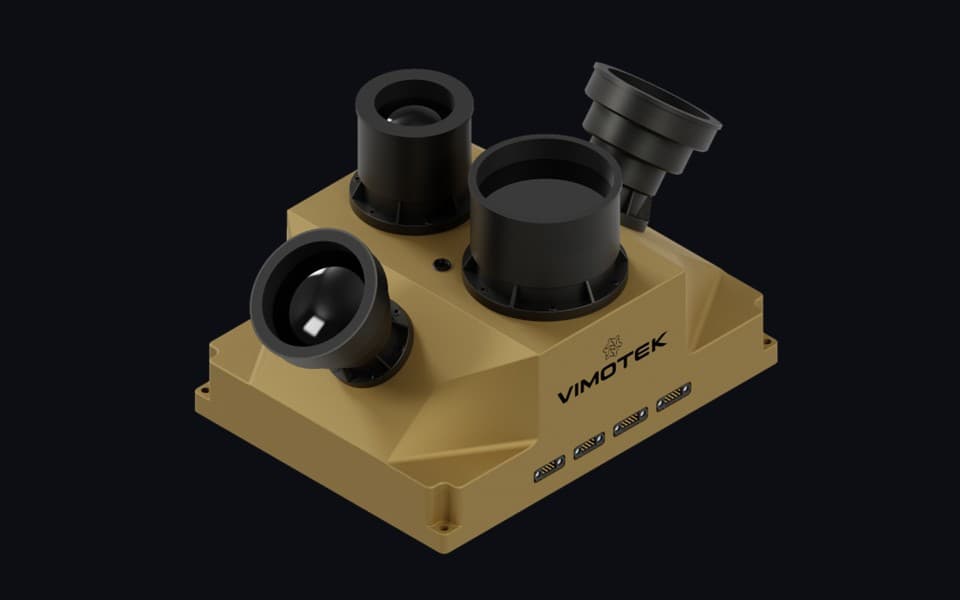
Vimotek, Vinterstellar and the Swedish Institute of Space Physics are developing onboard capabilities for detecting, tracking and assessing nearby space objects through the LSSA-Pilot project.
Technology
Digital-twin validation for Exotrail proximity operations
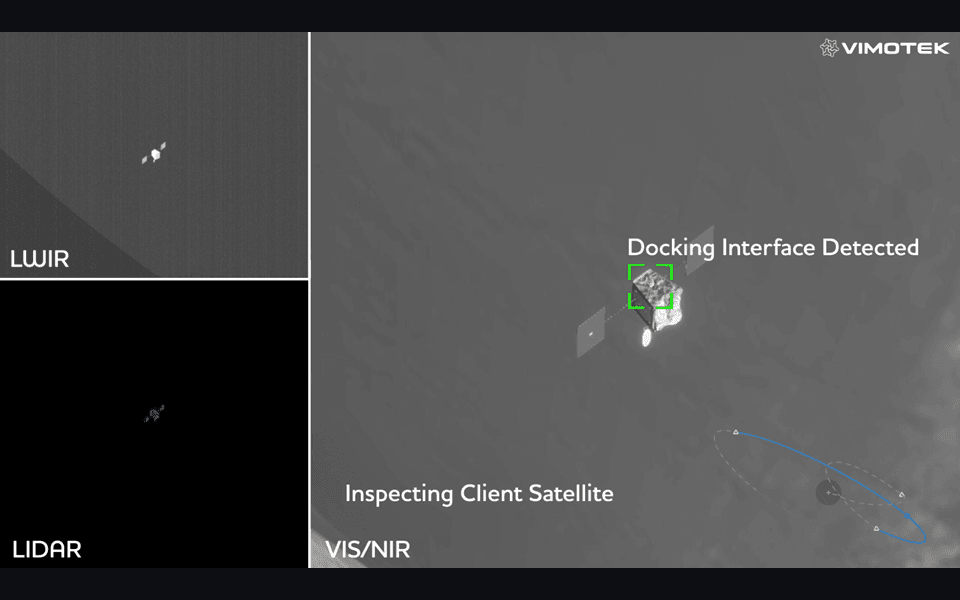
Vimotek used Orbittwin to build a mission-specific digital twin supporting Exotrail’s early validation of rendezvous and inspection concepts for future proximity operations.
Programmes
Validating spacecraft-encounter technology for defence applications
Vimotek has participated in Sweden’s Civil-Military Innovation Programme to validate how spacecraft-encounter technology can support defence-related space operations and strengthen Swedish capability.